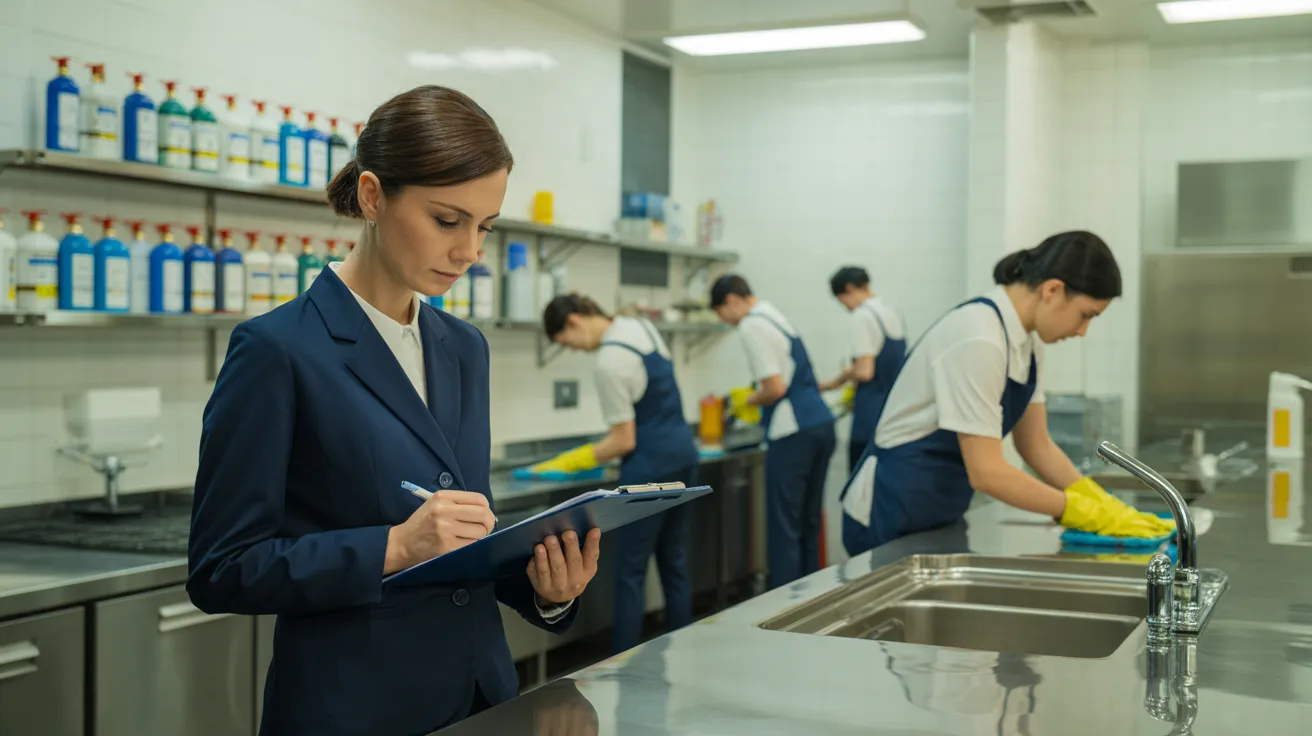
Commercial cleaning and food safety professionals in Brampton support restaurants, food centers, baking facilities, warehouses, and food service operations staying compliant. They decontaminate regularly touched surfaces, food contact areas, equipment, floors, drains, restrooms, and food handling spaces using certified products, at correct dilution, and recording exposure duration. You require scheduled cleaning determined by risk, food throughput, food allergies, and inspections, plus documented proof backing Hazard Analysis Critical Control Points, quality reviews, and public health compliance. The following information outlines how effective cleaning systems must contain.
Key Takeaways
- Brampton's sanitation experts support restaurants, grocery departments, commissaries, warehouses, bakeries, schools, mobile vendors, and allergen-sensitive operations.
- Zone-based workflows sanitize high-touch surfaces, food-contact equipment, kitchens, floors, drains, restrooms, and storage areas for eliminating cross-contamination.
- Checking of approved sanitizer dilution, alignment, and exposure duration is performed by qualified providers, with completion recorded using samples, audits, and remedial documentation.
- Regular, weekly, and cyclical activities assigned by zone form sanitation calendars based on danger, production rate, switches, spills, and standards.
- Choose vendors with HACCP, sanitation, knowledge, WHMIS, education, protection, references, coded implements, and assessment-ready maintenance records.
What Brampton Venues Require Food Safety Cleaning?
Food safety cleaning is required for any Brampton facility that processes, stores, prepares, packages, or serves food. Apply it to your operation if it falls within health oversight, food standards, or HACCP systems. This includes dining establishments, break rooms, distribution centers, market departments, meat shops, fish areas, stores, and food prep kitchens.
You'll additionally need adherent sanitation standards in distribution warehouses, production plants, frozen storage areas, commercial bakeries, educational meal programs, banquet venues, and food delivery services. Mobile and temporary businesses apply too, examples being mobile kitchens, market vendors, and seasonal booths. Should your team prepare supplies, portion finished foods, reheat items, or manage allergen inventory, your establishment requires established hygiene documentation. In Brampton, sanitation continues to be compulsory; it comprises lawful, operational, and customer protection standards.
What Do Brampton Cleaning Experts Clean?
You need cleaning experts who sanitize high-touch surfaces, kitchen areas, floors, and bathrooms to meet food safety and public health standards. They target these areas because they present the highest risk for cross-contamination, slip hazards, and hygiene violations.
If you comprehend their cleaning services, you'll successfully ensure your operation satisfies required operational and regulatory standards.
High-Touch Surface Sanitizing
base cleaning intervals according to foot traffic, environmental hazards, and business activities.
in cases where results fall below specified limits. They also reduce cross-contact by changing cloths, implementing unidirectional procedures
Cooking Zones, Walking Surfaces, and Restroom Environments
Brampton cleaning services focus on kitchens, floors, and restrooms as each zone presents different sanitation, slip-and-fall, and public health concerns. In industrial kitchens, you need grease removal from cooking stations, appliance surfaces, drain systems, preparation areas, and backsplashes to reduce contamination and pest pressure.
Professional floor care with documentation is also included. is also provided as part of the service.
Restroom sanitation involves sanitizing surfaces, fittings, separators, dispensers, and containers, replenishing amenities and managing odor. They also service restaurant moprooms, where chemical storage, sink hygiene, and drainage conditions can affect sanitation compliance and staff safety daily.
Food Safety Cleaning Significance for Brampton Businesses
Brampton facilities demand food-safe cleaning standards to fulfill health code requirements and pass inspections. You also reduce cross-contamination by cleaning and sanitizing food-contact surfaces, equipment, and high-touch areas correctly. Most importantly, you help protect public health by lowering the risk of foodborne illness in your facility.
Health Code Compliance
Since Brampton food establishments must follow strict public health standards, your food safety cleaning directly impacts your ability to meet health codes, safeguard diners, begin now and sidestep regulatory penalties. You must maintain sanitized food contact points, documented cleaning schedules, safe chemical management, and documented employee protocols that meet municipal and provincial inspection expectations.
Robust cleaning systems enables cross-contamination prevention by decreasing buildup on joint machinery and commonly contacted zones.
Contamination Control
Maintaining regulatory compliance copyrights on your power to stop cross-contamination during daily food handling and cleaning. You must separate raw ingredients from ready-to-eat foods, sanitize prep surfaces between tasks, and position cleaning agents away from food surfaces. Clear procedures reduce transfer risks and support consistent compliance during inspections.
You could implement allergen segregation to stop main allergens from reaching common areas, containers, or machinery. Apply separate boards, color-marked equipment, and rigorous tool identification so staff don't mix items during preparation or service. Enforce washing hands following uncooked meat, fish, egg products, or allergens. Swap cleaning rags frequently, and test disinfectant concentration using strips. When you train staff to follow these controls each shift, you create a cleaner, safer operation that matches Brampton's safety requirements every day.
Community Health Protection
Should cleaning standards break, you don't simply encounter inspection problems—you expand the odds of foodborne illness impacting customers, staff, and the wider Brampton community. You also undermine your responsibility in safeguarding community wellness, especially in high-traffic food premises where contamination can spread quickly through surfaces, equipment, and touchpoints.
You require cleaning protocols that eliminate soils, sanitize effectively, and validate outcomes. This involves maintaining exposure durations, selecting approved disinfectants, logging schedules, and coaching employees to meet regulatory requirements. These measures prevent illness spread by decreasing microbial counts before contaminating food or hands. Throughout Brampton, strong cleaning safeguards susceptible populations, reduces outbreak risk, and demonstrates accountability. When you follow proper protocols, you go beyond requirements—you lower hazards and enable safer food service throughout the area.
How Can Cleaning Practices Ensure Food Safety Compliance?
Adopting comprehensive cleaning schedules reinforces food safety compliance by reducing contamination risks, limiting pathogen development, and ensuring your facility complies with sanitation requirements under HACCP-based programs and public health regulations. You validate that food-handling surfaces stay visibly clean and microbiologically controlled, backing documented preventive controls and inspection readiness.
Proper cleaning procedures also reinforce allergen prevention by removing residues that can cause undeclared allergen exposure.
When Do You Plan Commercial Cleaning?
Cleaning plans work best when you set them according to risk factors, production rates, and legal standards rather than depending on a fixed calendar alone.
Periodic tasks need to be planned separately
How Do You Choose Brampton Cleaning Experts?
Evaluate providers first by food-safe sanitation requirements rather than cost. You must ensure each provider understands CFIA, public health, and HACCP-aligned expectations for your business. Request insurance proof, WHMIS compliance, staff training documentation, and supervision methods. Check technician awareness of contamination prevention, chemical safety, and traceable sanitation records.
You must also evaluate business consistency and accountability. Seek references from food facilities in Brampton, then assess response times, corrective processes, and communication standards. Ensure the company enables supplier checks and can provide inspection-compliant records when authorities or third parties demand verification. Verify equipment is maintained, colour-coded tools are deployed correctly, and operational-specific risks are understood. A reputable service protects compliance, product integrity, and your market standing.
What's covered in a sanitation cleaning strategy?
Write out a plan that defines every sanitation activity, guideline, and role before starting production. You should record cleaning schedules, approved products, ratios, contact periods, tools, and validation approaches for each zone, surface, and piece of equipment. Ensure you include pre-operational inspections, corrective actions, and employee training requirements.
Your strategy should also address cross-contamination controls, waste handling, pest-prevention measures, and documented schedules for restrooms, drains, floors, and food-contact areas. Detail how you'll separate raw and ready-to-eat processes, facilitate ingredient tracking, and ensure accurate allergen labeling through validated cleaning between product changes. You should assign accountability, maintain signed records, and assess results against regulatory standards, HACCP controls, and customer requirements. When gaps appear, modify procedures immediately and instruct staff.
Frequently Posed Questions about the Plan
Will cleaning services manage nighttime hours at Brampton facilities?
If you operate regulated spaces, you'll also need documentation that enable audits and ensure quality assurance.
Do sanitation professionals offer hazard containment services?
Yes, you can discover many Brampton cleaning professionals providing hazard containment services. They handle hazardous incidents, evaluate risks, isolate contamination, and initiate rapid cleanup to minimize exposure and prevent business disruption. You should verify response rates, certifications, PPE measures, and waste procedures. If your facility must meet compliance standards, select a service that documents events, adheres to standards, and ensures audit compliance.
Will environmentally safe disinfectants protect safely food-contact surfaces?
In essence, eco-friendly disinfectants remain safe for food-contact surfaces provided you choose disinfectants approved for food contact that meet regulatory requirements. Verify exposure duration, dilution ratios, and rinse procedures in advance of use. Botanical formulations reduce toxic chemical contact, although you must have proof of efficacy against specific pathogens. To ensure residue free surfaces, implement exact manufacturer guidelines and confirm the disinfecting agent adheres to relevant food safety standards.
Will cleaning schedules accommodate seasonal shifts?
Certainly, cleaning plans adjust to seasonal variations well. Adapt schedules, staffing, chemicals, and validation steps to correspond with seasonal workflows while preserving compliance standards. Lower production downtime through scheduling cleaning amid line changes, maximum output, and usage cycles. Also revise written procedures, employee training, and monitoring protocols to account temporary risks, new allergens, or elevated soil levels. Periodic assessments ensure your program effective.
Do commercial cleaners train employees on sanitation best practices?
Indeed, professional cleaners typically provide employee coaching on sanitation best practices. Your team receives instruction on proper chemical use, contact times, cross-contamination prevention, equipment breakdown, and record-keeping. They typically follow training with HACCP, GMP, and CFIA or regional health standards requirements. Many perform compliance inspections to confirm standards, reveal issues, and strengthen improvement measures. This assists you to establish reliable processes, pass inspections, and reduce food safety risks on a daily basis.
Final Thoughts
By partnering with Brampton commercial cleaning and food safety experts, you aren't just organizing—you maintain your facility compliance-focused and your standards in compliance. From production areas to kitchen zones, every sanitized surface and maintained corner decreases contamination and prevents costly issues. By arranging service on the right schedule and adhering to a systematic cleaning protocol, you secure your team, customers, and your standing. In a heavily controlled environment, clean spaces are mandatory—they're key to business compliance.